Wood Grouse Cross Stitch Pattern

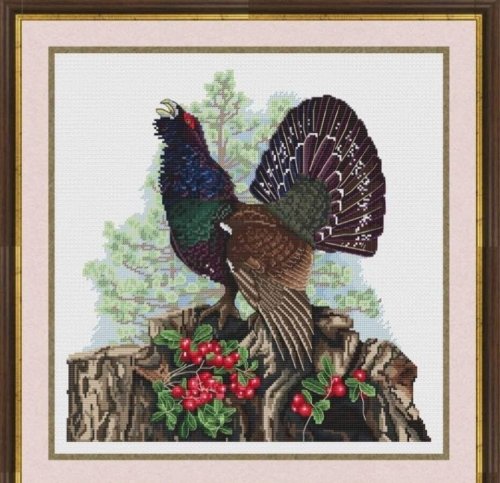
We have a new bird cross-stitch pattern, this time a big one. It’s a Wood Grouse, which is also called Western Capercaillie, or Heather Cock. It is the largest member of the grouse family. Male and female Capercaillie birds can be individually identified easily by their size and colouration. Our pattern presented a male.
wp-1582907836877862735016150364045.jpg

At one time it could be found in all the taiga forests of northern and northeastern Eurasia within the cold temperate latitudes and the coniferous forest belt in the mountain ranges of warm temperate Europe. In Norway, Sweden, Finland, and Russia their populations are large, and it is a common bird to see in forested regions. However, the Scottish population became extinct, but has been reintroduced from the Swedish population; in Germany, it is on the “Red List” as a species threatened by extinction, so it has not been hunted in Scotland or Germany for over 30 years.

Singing during breeding season is probably the most interesting thing about Wood Grouse. It starts according to spring weather progress, between March and April and lasts until May or June. At the very beginning of dawn, the tree courting begins on a thick branch of a lookout tree. The cock postures himself with raised and fanned tail feathers, erect neck, beak pointed skywards, wings held out and drooped and starts his typical aria to impress the females. The typical song in this display is a series of double-clicks like a dropping ping-pong ball, which gradually accelerate into a popping sound like a cork coming of a champagne bottle, which is followed by scraping sounds. Towards the end of the courting season, the hens arrive on the courting grounds, for “play”. The cocks continue courting on the ground: this is the main courting season. (From https://en.wikipedia.org/wiki/Western_capercaillie).

Goldcrest Cross Stitch Pattern

           We have a new small bird counted cross stitch pattern – Goldcrest.

20200223_1428541219666950921442131.jpg

Goldcrest is the smallest European bird, however, it isn’t an ordinary bird. Its colourful golden crest feathers, as well as being called the “king of the birds” in European folklore, gives rise to its English and scientific names. The scientific name, R. regulus, means king or knight. 

Four-leaf Clovers Bunting

For a long time, people believed that four-leaf clover is a symbol of luck, a powerful natural guardian.

The ancient Celts, for example, gave the four-leaf clover the properties of a reliable defender. They took the guardian with them as they set out on the road. Bundles of dried plants were laid out at home to attract prosperity and deter evil spirits.

For the Druids, the four-leaf clover was a symbol of the universe. Each of its blades was the embodiment of earth, water, air and fire.

The glorious reputation of the plant remains to this day. Tha amulet in the form of a happy leaf can become a reliable helper and protector, no matter what shape you use it in – as a jewellery piece, tattoo or embroidery on your clothes. The main thing is to believe that it will bring you luck. That’s why I decided to make a garland of lucky clovers, just let them bring happiness to your home.


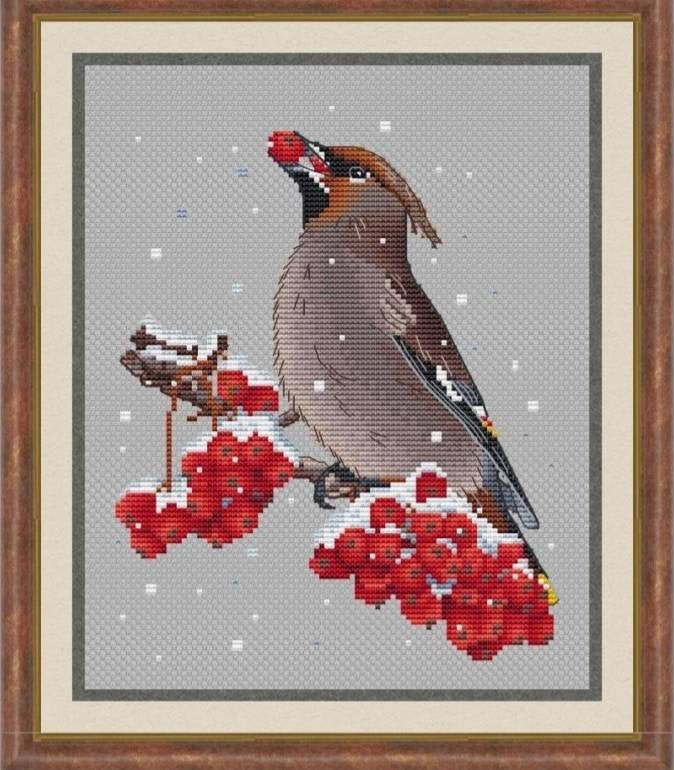
Bohemian Waxwings Counted Cross Stitch Pattern

A new cross stitch chart at our shop presents Bohemian Waxwings.

These birds are social birds that form large, compact, and noisy groups-sometimes in the thousands – as they scour the landscape looking for fruit during the nonbreeding season. They dangle on flimsy branches to reach fruit or perch side by side in fruiting trees. Bohemian Waxwings live in Northern forests of Eurasia, Canada and Alaska.

Sokoke Forest Cat

Hello, my dear readers. I wasn’t there for a few days because I had a lot of translation work, but I’ve come back and I want to show you the new pattern in our shop – Sokoke Forest Cat. This exotic cat originates from the Sokoke district of eastern Kenya but was further developed in Denmark. Despite its wild character, Sokoke Cat is friendly by nature and can be perfect for those seeking an animal companion. It has a relatively small head with almond-shaped eyes that are usually amber to light green in color. But the most eye-catching feature of the Sokoke Cat, however, is its unusual coat, which is lustrous, short, and body-hugging. The coat pattern, dubbed “African Tabby,” resembles the Blotched Tabby with a “wood grain” look. The color of the coat ranges from warm light brown to deep chestnut brown. So if you are a Cat person, you can stitch this beauty and have it for yourself forever!

etsyimage-335983870875787924853.jpg

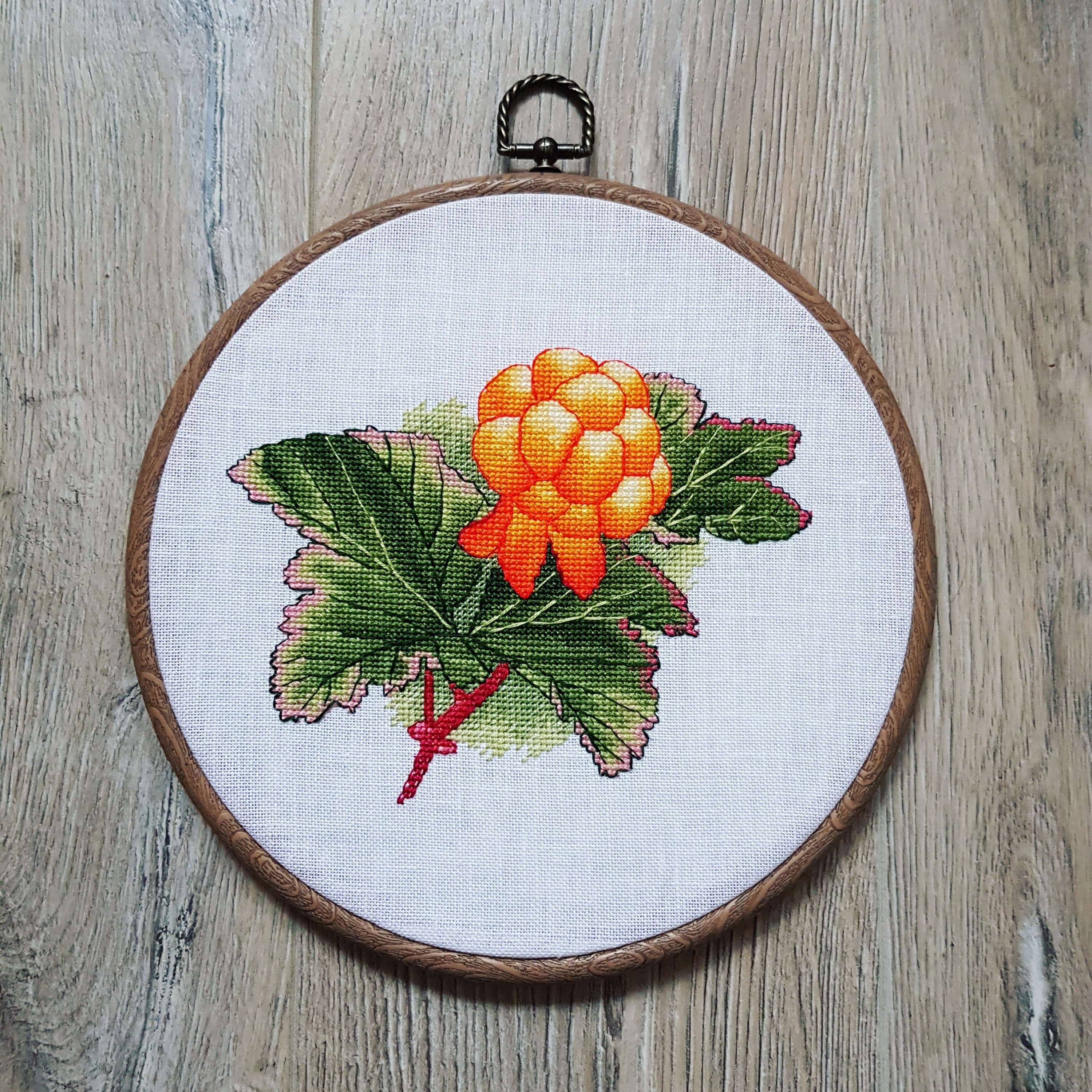
Finished Cloudberry Picture

I’ve done it! Complete cross-stitching and framed in a hoop.

img_20191114_081026_6523231386058473898388.jpg

Now I can say, that it was an adventure and a challenge for me. Cross stitching wasn’t a big problem, I know the author of the pattern and I was aware of the fact, that Serafima Abramova uses a lot of blends in her projects. That’s ok, but I haven’t back stitched with two threads before. One thread is ok, but two? What is more, it was a light green thread. So when I started back-stitching, I noticed, that it doesn’t look nice for me. And since I’m a perfectionist, I couldn’t leave it like this. After consulting with the author of the pattern and my cross-stitching colleagues from a Facebook group, I tried some different methods and decided to do this backstitch with couching. I did it for the first time and I understood, that I need either stands or the third hand to do it correctly. Can you imagine, what it looked like? But because I’m still very stubborn, I made it.  Everything else was simple. Although I was afraid that the red color might stain the fabric during washing, I almost completely dried out the picture and only then I ironed it carefully and it turned out that ironing the natural linen is much harder than evenweave. I was also a little afraid of sewing white felt to the back of the picture, but everything went well and in the end, I’m satisfied with the result of my work. I hope that the customer will also be satisfied with this cross-stitched picture.

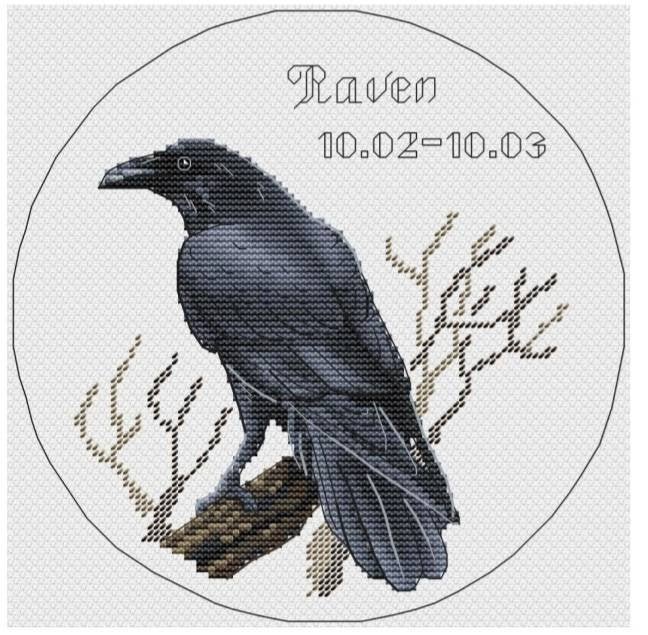
Raven Counted Cross Stitch Pattern

When we were in London in September, we planned to visit the Tower of London and we knew that no trip to the Tower would be complete without a sighting of a raven, which is the symbol of Monarchy, tradition, and history. “If the Tower of London ravens are lost or fly away, the Crown will fall and Britain with it.”Or so the legend goes! The ravens were there!

Ravens are one of the smartest animals, which sometimes associated with death and dark omen. Edgar Allan Poe knew what he was doing when he used the raven instead of some other bird to croak out “nevermore” in his famous poem. But the real bird is somewhat of a mystery. Cultures from Tibet to Greece have seen the raven as a messenger for the gods. Celtic goddesses of warfare often took the form of ravens during battles. The Viking god, Odin, had two ravens, which flew around the world every day and reported back to Odin every night about what they saw – more interesting facts about this bird you can read here

It is said, that people born in the month of Raven find strenth in solitude and don’t like the hustle and bustle. They can also easily find the right solution to any problem because of developed powerful intuition. As Ravens, they are always calm and confident, because these birds are associated with wisdom and insight knowledge. What is your Zodiac sight? Maybe Raven? Or Wolverine? We are going to create more Zodiac sights by Slavic Horoscope, so the theme is continued.

etsyimage-308189917118453661924.jpg

Wolverine

Today I placed in the shop a new pattern of a very unusual animal – Wolverine, also called Forest Viking.

Wolverine is the totem of those who were born from January 11 to February 10. Wolverine is a very territorial beast – he makes sure that no stranger encroached on his property. Wolverine’s character is strong and inflexible – no one will be able to shake his beliefs and lead him astray. Nevertheless, Wolverine often puts the interests of his family and relatives above his own – if any of his family or friends have a problem, he will make every effort to help. Wolverine is quite self-critical – he knows all his strengths and weaknesses. He has a lot of friends, but he also has enough enemies. However, even the enemies feel respect for him and try not to cross his path once again.

It’s a pretty big member of the Cunya family. Externally, the wolverine resembles a miniature bear. Externally, the wolverine resembles a miniature bear. The wolverine is pretty beautiful. The color of fur varies from dark brown to black, sometimes there are light brown animals. Most have a light silver mask on their faces and light yellow or reddish stripes coming from their shoulders and converging on their sacrum. It lives in North America and northern Eurasia. It inhabits the northern taiga, forest-tundra. Wolverine is mainly active at night, but can also go hunting during the day. The scientific name Wolverine Gulo translates as “glutton”. She does not suffer from a lack of appetite, but she can also starve for several days. In general,  this animal is also called: the demon of the north, and a forest demon, and a damn bear, and a skunk bear. Apparently, the beast’s ability to pick up everything that is “badly lying” has generated a lot of stories about the unusual audacity, cunning, and cunning of the wolverine. Indeed, there is a sin behind it: it can ruin hunting traps, eat bait. For such tricks hunters consider her to be a “vicious predator”. But it does not cause direct harm to a person and can not attack him.